Menu
  Du Jardin Beauty
  • Home
    • Workshops & Events
    • Spotlight
    • Reviews & Testimonials
  • Shop
    • HOLIDAY GIFT SHOPPE
    • eGift Cards
    • Luxury Skincare
    • Herbal Haircare
    • Best-Sellers
    • Multi-Purpose Utility Soaps
  • GIVING BACK
    • Wild & Locally Sourced
    • Charity: New Hope Midcoast
    • Fair-Trade Items
  • LEARN
  • About Us
    • FAQ's & Policies
    • Contact
    • Services
  • Wholesale
  • Home
    • Workshops & Events
    • Spotlight
    • Reviews & Testimonials
  • Shop
    • HOLIDAY GIFT SHOPPE
    • eGift Cards
    • Luxury Skincare
    • Herbal Haircare
    • Best-Sellers
    • Multi-Purpose Utility Soaps
  • GIVING BACK
    • Wild & Locally Sourced
    • Charity: New Hope Midcoast
    • Fair-Trade Items
  • LEARN
  • About Us
    • FAQ's & Policies
    • Contact
    • Services
  • Wholesale

Du Jardin Learning Center

Herbal Spotlight: Elderberries, with My Ultimate Elderberry Syrup Recipe

9/21/2020

2 Comments

 
Picture
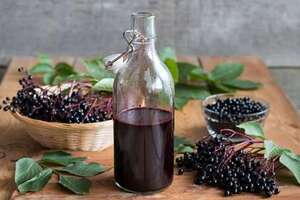
It is getting to be 'that time of year' again -- & once again, we are headed into  a long, rough Cold & Flu season. Delicious & powerful, elderberry syrup is wonderful to have on hand to treat colds & flu, & also for use as a preventative. Late Summer/early Fall when elderberries are in season is the perfect time to make some homemade syrup. I will share my favorite recipe & some foraging tips too--
Quite a buzz about elderberries recently--The benefits & properties of Elderberries have been an increasingly popular topic over the last few years, although use of this amazing plant has been documented for centuries. This Herbal Ally has long been used for preventing & treating all kinds of ailments. A longtime folk-medicine staple, elderberry has been traditionally used to help prevent catching colds & viruses, as well as to shorten the severity & duration of many flu symptoms. Multiple recent scientific studies have confirmed elderberry’s antiviral & immune system supporting properties, as well as its use helpfulness in treating diabetes. Elderberry flavonoids have now been proven block the ability of H1N1 viruses to infect host cells [pubmed.ncbi.nlm.nih.gov/19682714/] & its compounds shown to minimize flu symptoms & strengthen immune response [sciencedaily.com/releases/2019/04/190423133644.htm.]
The common American Elderberry [Sambucus canadensis] & European Elder [Sambucus nigra] are both prolific & commonly found growing wild throughout most of the United States in disturbed areas, along roadsides, & in hedgerows, making them excellent candidates for foraging. Be sure to harvest only from shrubs not treated with pesticides, & those on lesser- used roads, as well as to confirm the plant ID.
Picture
The gorgeous, jewel-toned berries grow in umbel clusters.
 The challenge is not in finding them, but in hitting them at the extract-right time!  
​
The season for ripe berries vacillates wildly from early August through to October, with some berries being perfectly ripe on one shrub, yet not ready on another nearby shrub just down the road! And then, you have to beat the birds & other animals to the harvest. We are not the only creatures ‘hunting’ them!  
​
Picture
I use some for syrup and some for brandy each year!
The shrubs are easily spotted when in bloom, billowy umbels of white flowers alive with pollinators are quite eye-catching [the flowers are incredibly useful as well!] & easy to make note of. Would-be foragers should then check back in on them frequently beginning in early August. It is important that the berries be fully ripe when harvested -- unripe berries are toxic, as are the stems & leaves of the plant, &  should not be used. Once cleaned, your haul can then either be frozen or dried for later use, or used  right away for making syrups & in baking. ​
click here for my elderberry
​ brandy recipe
 Berries should always be cooked before consuming. They are quite flavorful & make lovely cakes, tea breads, pies, & jams. I also make some Elderberry Brandy each year to enjoy throughout the long, Maine Winters. [click here for that recipe] ​
You can also purchase elderberries, fresh or dried, if you don't have access to wild growing fruit. Many health food stores & online herb houses offer them-- although during cold & flu season they can be pretty hard to come by!  As I mentioned before, the stems do contain toxins & should be removed before processing. The easiest way to accomplish this is to pop your freshly picked berries in the freezer for about an hour-- the berries can then be easily & quickly ‘combed’ off the stems.
Making the tasty & beneficial syrup is quite easy, & there are many recipes for them floating around the internet. In this post, I will share my favorite recipe for super-strength Ultimate Elderberry Syrup & explain why I add what I add & best use practices. As with any recipe, it can obviously be tweaked freely for personal taste & use. It can be made with either fresh or dried elderberries. Use what you have & what you like. So what makes my recipe super powerful?  I love to boost mine with dried elderflowers, which add a natural sweetness, & are themselves wonderful for fighting colds & fevers. I also add ginger & spices, not just for the delicious flavors they add, but for the many  beneficial properties they each provide. [see below]
Picture
 Additionally, I highly recommend using RAW honey as the sweetener for your syrup whenever possible. It is full of powerful antioxidants, nutrients, & enzymes that are still intact because it has never been heated. [please note: honey should not be given to children younger than 1 year old]
Picture
Fresh Ginger: Stimulates the immune system to fight bacterial & viral infections. [Particularly effective as an antiviral siting these sources: Found to stop the onset of upper respiratory infections (Holmes, 1997,] as well as stimulating macrophage activity to prevent viruses from attaching to cell walls (Buhner, 2013) ] Cinnamon: A great decongestant & antiviral. Clove: A natural expectorant & very antiseptic. Cardamom: Antibacterial properties & helps to flush toxins. Allspice: Helpful for fevers & colds.
Picture
Lemon Balm [Melissa Officinalis]
grab your bottle of
​our tincture here
But, what really takes my syrup to the next level & boosts its efficacy is  the addition of Lemon Balm tincture to it. Lemon Balm [Melissa Officinalis] has been shown to be a powerful antiviral, as well as to support sleep & help to relieve tension. Due to my autoimmune disease, I take keeping colds & bugs at bay very seriously, even more so now in our current state with the pandemic. I find this extra layer of protection very beneficial, & the emotional & sleep support invaluable as well. This extra ingredient is why I call this Ultimate Syrup. The tincture is an ideal additive, but effective syrup can still be made without it if you choose to leave it out.
Ultimate  Elderberry  Syrup
4 cups of Water  
2 cups Fresh or Frozen Elderberries [or 1 cup dried]  
¼ cup Dried Elderflowers  
2-3 inches Fresh Ginger, sliced & peeled  
1 large Cinnamon Stick  
5 or 6 Whole Cloves [or ½ tsp ground]  
2 or 3 Cardamom Pods  
2 or 3 Whole Allspice Berries  
1 cup Honey, preferably Raw honey  
Lemon Balm Tincture, 1 TBS per 8oz
We start our syrup by cleaning fresh berries, removing any stems, leaves or green/unripe berries. [use the freezer trick mentioned earlier if you have whole umbels] No need to fret over some tiny stem bits-- just remove all the large pieces. Place your berries, along with the elderflowers & spices if using, into a large cocotte or pot & cover with 4 cups of spring or distilled water. Bring to a boil over medium heat, then simmer uncovered for about 30 minutes, reducing some. Strain off your liquid, ​
Picture
Press your berries during the first straining.
pressing berries to release any extra juice. The spent berries & spices can be thrown in your compost now or put out for the birds--we find they love them! Run the resultant liquid through an extra-fine sieve to completely remove any stragglers or tiny bits. While it is still warm, add your raw honey & stir to dissolve & incorporate. You want your liquid to be warm enough to dissolve the honey, but not too hot in order to preserve the benefits of the raw honey. 
Once it has cooled completely, I add the lemon balm tincture for an additional kick of serious antiviral protection. I recommend adding 1 TBS for every 8 ounces of syrup, stirring to fully combine. Your elderberry syrup can then be poured into sterile jars/bottles for keeping. It will last for 4-6 months in the refrigerator, or can be frozen for up to a year. I do not recommend canning it as the additional hot water bath can damage the beneficial properties of the raw honey.
Picture
Your syrup is now ready to enjoy!  Remember, Elderberry syrup is powerful herbal medicine. I recommend adults take 1 TBS of elderberry syrup 2-3 times per day at the onset of a cold or flu, continuing that amount throughout the duration of the illness, & children ages 1 & up half that. It is also fabulous to take 1 TBS a day as a preventative during periods of high stress or if you think you were exposed to illness, even if you aren’t experiencing any symptoms yet. I don’t recommend taking elderberry syrup daily 
as a ​preventative. It is an effective immune system booster, & while that is great during illness, or potential exposure to illness, it is not advised to constantly stimulate your immune system. [This is especially true for those with autoimmune issues] Too much of a good thing is possible!
I hope you enjoy this recipe & find the syrup helpful. Let me know what additions you like to add to yours!  That is all for this week-- Stay safe & don’t forget to #StopAndEatTheFlowers
2 Comments

Herbal Spotlight: Staghorn Sumac, with Za'atar Spice & Sparkling Sumac Lemonade Recipes

9/7/2020

1 Comment

 
It grows just about anywhere & everywhere --but did you know that Staghorn Sumac is edible? Indeed, sumac is a crucial ingredient in Za'atar spice blends & was widely used by Native Americans, both as medicine & for refreshing drinks! In this post we will discuss ID-ing & foraging sumac & how to clean & prepare it, as well as how to make your own ‘spice’ & some tasty drinks too!​
Picture
Picture
Image: aprepperspantryjournal
Now, to be clear, I am talking about Staghorn Sumac [Rhus typhina] -- not to be confused with Poison Sumac [Toxicodendron vernix] which is a totally different genus. This is an easy one for even beginner foragers, no worries!
​
There is no chance of accidentally mixing the two up;  they have completely different leaves, smooth VS serrated, & completely different looking fruit, clusters of white, hairless berries VS ‘torches’ of fuzzy red seeds. 
Additionally, Poison Sumac grows in bogs & marshes.  
 ​ Poor Staghorn Sumac gets the bad-rap for naught!  Many, many people believe all types of Sumac to be poisonous, but that's far from true! Rhus-Family Sumac has been used medicinally & culinarily for centuries. It is packed with Vitamin C, making it a strong antioxidant, but it is also anti-inflammatory,  a diuretic, antiseptic & astringent! Sumac is truly valuable as an easily foraged source of Vitamin C in the northeast USA. Not just medicine & food--Sumac is also excellent for dying yarns & fabrics, with no need of a mordant! Sumac has a unique, tart flavor similar to lemon. One of the simplest ways to use it is to make Sumac Lemonade [recipe to follow] with fresh bobs, but it can also be dried & used as a spice. Sumac has been used for centuries in the Middle East & Mediterranean as a flavoring & is what gives za’atar blends their zing! I'll walk you through preparing your sumac & using it both ways!
The trees grow in stands where they wish [another aspect of the bad-rap--although if more people knew how tasty they are, they maybe wouldn't mind so much!] Staghorn Sumac’s branches are covered in a velvet-like fuzz similar to horns of stags--hence their name! The seed pods form clusters of ‘berries’ called bobs, borne like torches above the leaves, which become a brilliant, deep-red as they ripen. ​
Picture
Late August through September is the best time for foraging them--on into October if it has been dry. The bobs may feel a bit sticky to the touch. People will often squeeze bobs, then lick their fingers to check for tartness & ripeness! [hint: if it's bitter, it's not ripe yet!]  The strange red fuzz on the outsides of each seed is what provides the flavor & nutrients--that is what you're after! Clip whole bobs off at the base & bring them home to prepare. Look for bright red bobs, avoiding rusty brown ones or bobs with mold. As always, be sure to harvest only from trees that have not been sprayed with insecticides & that are far from heavily traveled roads/highways. Sumac is best harvested after a couple of days without rain, as the water washes much of the flavor out.
Picture
Fresh Usage:  You’ve brought your bobs home-- now it’s time to use them! First, we need to break up the seed heads. Start by carefully pulling back individual bundles or ‘branches’ of seeds from the outside of the clusters-- remember, it is the red fluff you are after! Pop these tiny branches off, removing them from the thick center core & any debris. You can then work to break up the small clusters into individual seeds, removing as much stem as possible.
 A couple cleaned handfuls are all you need to brew up some Sumac lemonade. The ‘berries’ contain a lot of tannins, so they are best cold brewed as hot water will bring on the bitter notes. We are ready to make our ‘lemonade!’
SPARKLING SUMAC LEMONADE
1 cup sumac berries [cleaned from about 2 clusters]
4 cups cold water
Super-fine sugar, honey, or plain simple syrup to taste 
Sparkling water
Put your cleaned sumac berries in a large mason jar or pitcher. Cover with cool water, pressing the berries down & softly crushing them a bit with the back of a wooden spoon. Cover & set aside to steep. Some people like a softer flavor & only steep for 2 hours or so. I like to let mine go overnight. The longer it steeps, the more intense the flavor. Your water will take on a pink tone as well as the flavor!
​Strain your liquid off with a fine-mesh strainer or cheesecloth, composting the spent seeds. Your pretty-pink base is ready to go! 
Picture
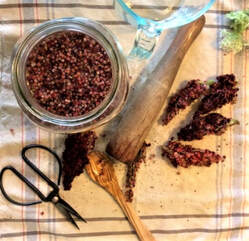
Press the berries with a wooden spoon or muddler
Sumac provides tartness & vitamins, but not sweetness on its own, so the next step is to sweeten your batch to your taste. I find adding plain simple syrup the easiest way to achieve this. Your Sumac Lemonade base can be stored in the fridge like this for up to 3 days. The base is great on ice on its own or used in cocktails! [plays nicely with vodka & gin]  I like to ‘up’ the refreshing factor by topping my glass of lemonade off with a splash of sparkling water: Simply add ice to a pitcher or glass & fill ¾ with Sumac lemonade, then float some sparkling water on top--Voila! Sparkling Sumac Lemonade!
Picture
The fresh, cleaned seeds are also lovely in a bar syrup, giving your drinks a truly unique sweet-tart flavor. I couldn't resist making up a batch & playing around with it as well-- Made some really lovely Staghorn Margaritas with it! [perhaps another post later with those…]
​
Dried Usage:  As I mentioned before, the seeds can also be dried & ground to use as a spice. You will often see dried sumac spice for sale in specialty grocery stores, but it is usually European Rhus coriraria, & honestly, our wild Staghorn is tastier! Sumac seeds are the main flavor components of za’atar spice blends & are delicious on their own. Remember, the fluff is what we want here too! The ‘berries’ will dry best broken up from their tight clusters. ​
Picture
I break up & clean my sumac as described above, then spread the seeds out to dry on screens. Many people use dehydrators on ‘fan’ setting with no heat or even heat lamps to dry their sumac. Any area with good circulation will do. After about a week, the seeds are usually dry enough to grind. The red fibers are our goal-- running the dried seeds through a blender or spice mill, then sifting them through a flour-sifter is the easiest way I have found to separate the red fruit fibers from the seeds & any small bits of stem left. Now you have your own Sumac Spice! Dried & ground, your sumac will keep for up to a year. It's wonderful on chicken, fish & eggs. Use it on its own or make your own blends, such as za’atar. ​
Simple Za’atar Blend
2 TBS Ground Sumac 
2 TBS Dried Thyme 
1 TBS Ground Sesame Seeds 
1 TBS Whole Sesame Seeds 
½ TBS Sea Salt
Picture
It is as simple as that! DELICIOUS! Try it mixed into labneh or brush some pita with olive oil, sprinkle some on top, & broil for a minute or 2 -- Heaven! I have heard some people like to add oregano or marjoram to their mix as well -- play around with it & find what works best for you.
Your taste buds will thank you for it!

That is all for this week-- I hope this post has helped to shake off some of Sumac’s bad reputation! Sumac is a perfect example of a truly misunderstood plant -- Delicious & nutritious foods & medicines are growing all around us!  Don’t forget to #StopAndEatTheFlowers 
1 Comment

    Categories

    All
    Events
    Homesteading Tips
    Informational
    Ingredient Spotlight
    New Products
    Pet Care
    Recipes & Ingredients
    Soaps


    Picture
    Beautiful AND Responsible

      Sign Up Here For Our Newsletter

    Subscribe to Newsletter

    Picture
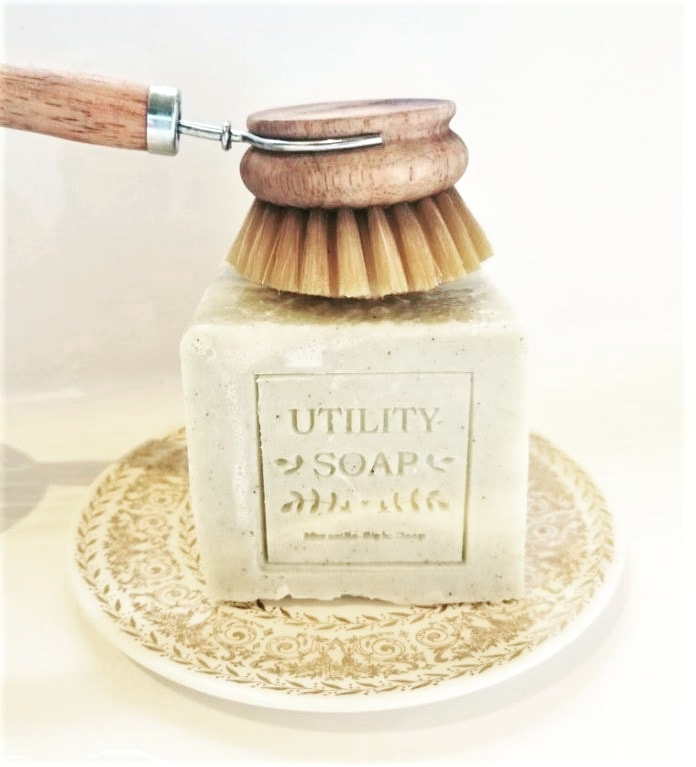
    Meet the Centuries-Old, French Cleaning Classic ​with A Modern Twist

    Author

    My husband & I were blessed with 2 beautiful girls. When I was diagnosed with MS, I couldn't keep up the pace working retail. We decided on a simpler life, built a cabin in the woods, & moved to mid-coast Maine ​


    Picture
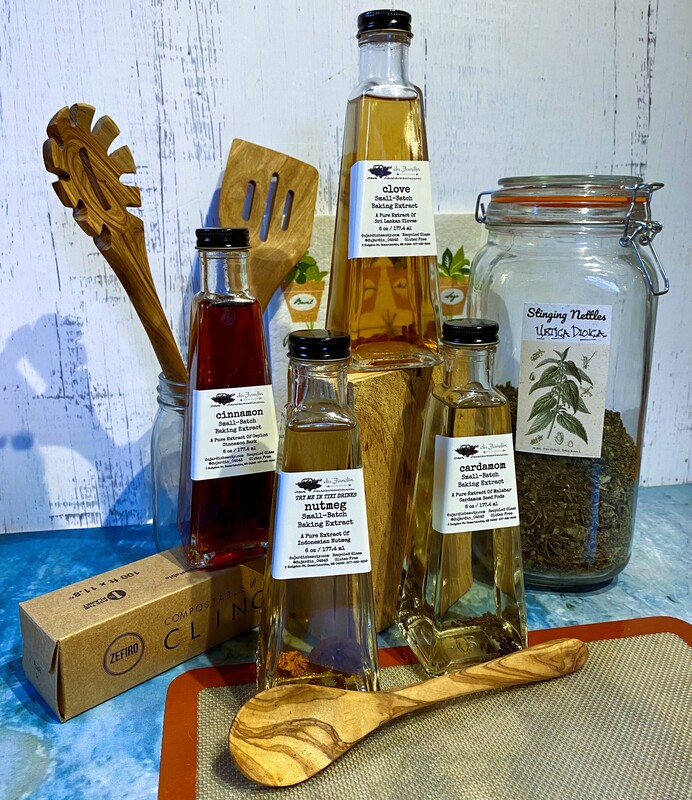
    Treat Yourself To Our Amazing, Handcrafted Extracts

    Archives

    July 2025
    May 2024
    March 2024
    February 2024
    November 2022
    October 2022
    March 2022
    February 2022
    December 2021
    November 2021
    October 2021
    September 2021
    August 2021
    July 2021
    June 2021
    May 2021
    April 2021
    March 2021
    February 2021
    January 2021
    December 2020
    November 2020
    October 2020
    September 2020
    August 2020
    July 2020
    June 2020
    May 2020
    April 2020
    March 2020
    November 2019
    October 2019
    August 2019
    July 2019
    June 2019
    May 2019
    April 2019

    Picture
    Discover Luxury Herbal Skincare For All Skin Types
    Picture
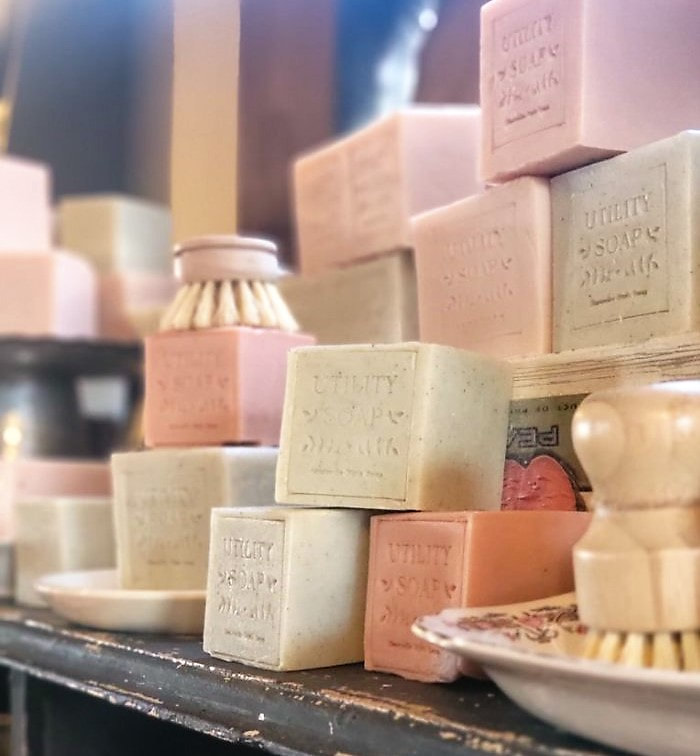
    Our Multi-Purpose Utility Soaps Are Our Best Sellers For A Reason! Find Out For Yourself!
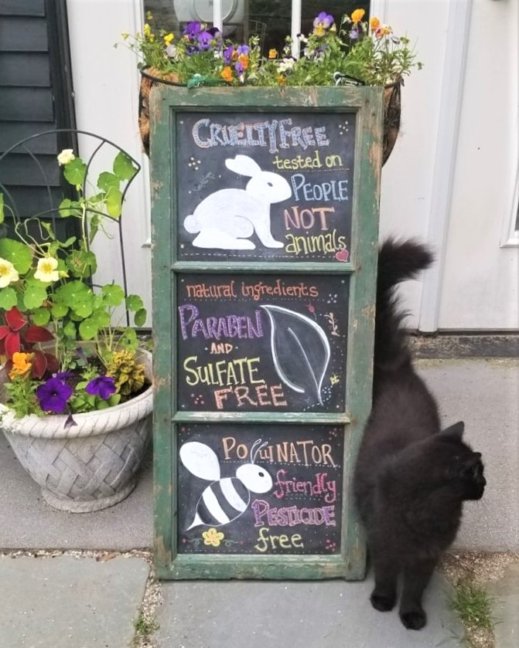
Always Free of Phthalates, Parabens, Formaldehyde-Releasers, Petro-chemicals & Sulfates.
Store Hours:
Wednesday 11 am - 4 pm
​Thursday 11 am - 4 pm
​Friday  10 am - 4 pm
Saturday 11 am - 3 pm
Damariscotta Farmers Market:​
May 16 - Oct 31 2025

Interested In Being A Stockist?
 Click Here for Wholesale Info
contact us:
Picture

    Sign Up For Our Newsletter:  Recipes,
    Special Events, Promo Codes

Subscribe to Newsletter

207-563-6256      [email protected]       © Du Jardin 2019 

127 Elm Street  Suite #2 -  Damariscotta, Maine 04543